
The distance between a good dinner and an unforgettable one is measured in millimetres — the angle of a tilted bowl, the precise moment a sommelier is summoned with a glance, the placement of cutlery that signals you belong. VIPMAKKI's definitive guide draws from the world's most rarefied dining rooms to ensure you command every table with absolute confidence.
The world's finest dining rooms operate according to a language that predates most of us. It is a language of gesture, placement, timing, and discretion — one that VIPMAKKI has decoded through decades of presence in the rooms where the world's most consequential conversations unfold over dinner. What follows is not a list of rules but an education in fluency, drawn from the traditions of the grand maisons of Paris, the private dining salons of London, the Michelin-starred temples of Tokyo and New York, and the tables where royalty — of birth, commerce, and culture — has gathered for centuries.
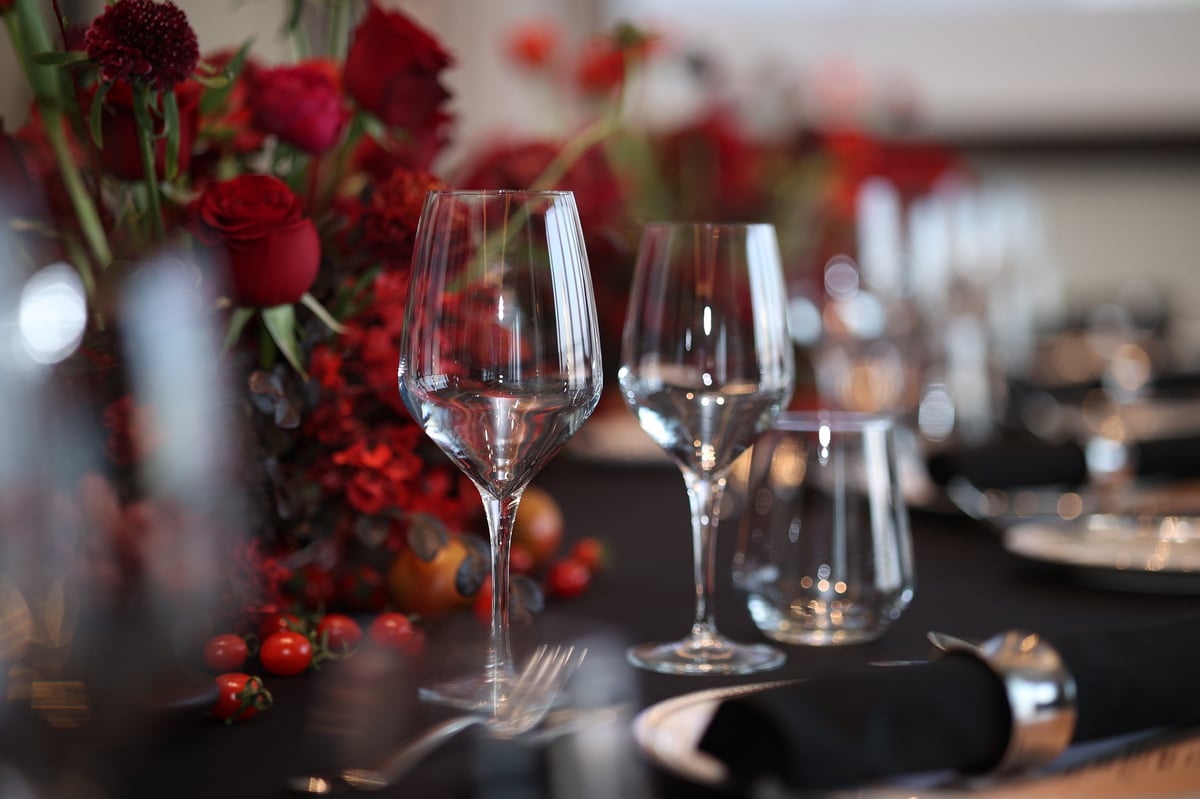
A properly set table is a map of the meal to come — and your ability to read it silently announces your standing before you speak your first word. The fundamental rule: work from the outside in. Forks to the left, knives and spoons to the right, arranged in the order of courses to be served. Your bread plate lives at your left, your water and wine glasses at your right — a mnemonic that has rescued diplomats: 'solids left, liquids right.' In the finest establishments, a charger plate anchors the setting until the first course arrives, and the placement of dessert cutlery above the plate — fork handle pointing left, spoon handle pointing right — signals the sweet course to come. The napkin is unfolded onto your lap only once the host or hostess has done so. Never before. This is not subservience; it is the grammar of the table, and its observance is the first mark of an assured diner.
The bread course is the first true test. Bread is broken, never cut — tear a bite-sized piece from your roll or slice, butter only that piece, and eat it before tearing another. Do not butter the entire roll at once. This small, deliberate practice signals patience and attention to detail. When soup arrives, spoon it away from you, towards the far edge of the bowl, lifting the spoon without tilting the bowl — though in the final spoonfuls, a slight tilt away from you is acceptable. When finished, place your spoon on the saucer or in the soup plate, never resting it in the bowl itself. Throughout the meal, your posture speaks: elbows never on the table, but forearms may rest lightly on the table's edge between courses. This is the European standard, and it is the one observed in all of the world's most formal dining rooms.
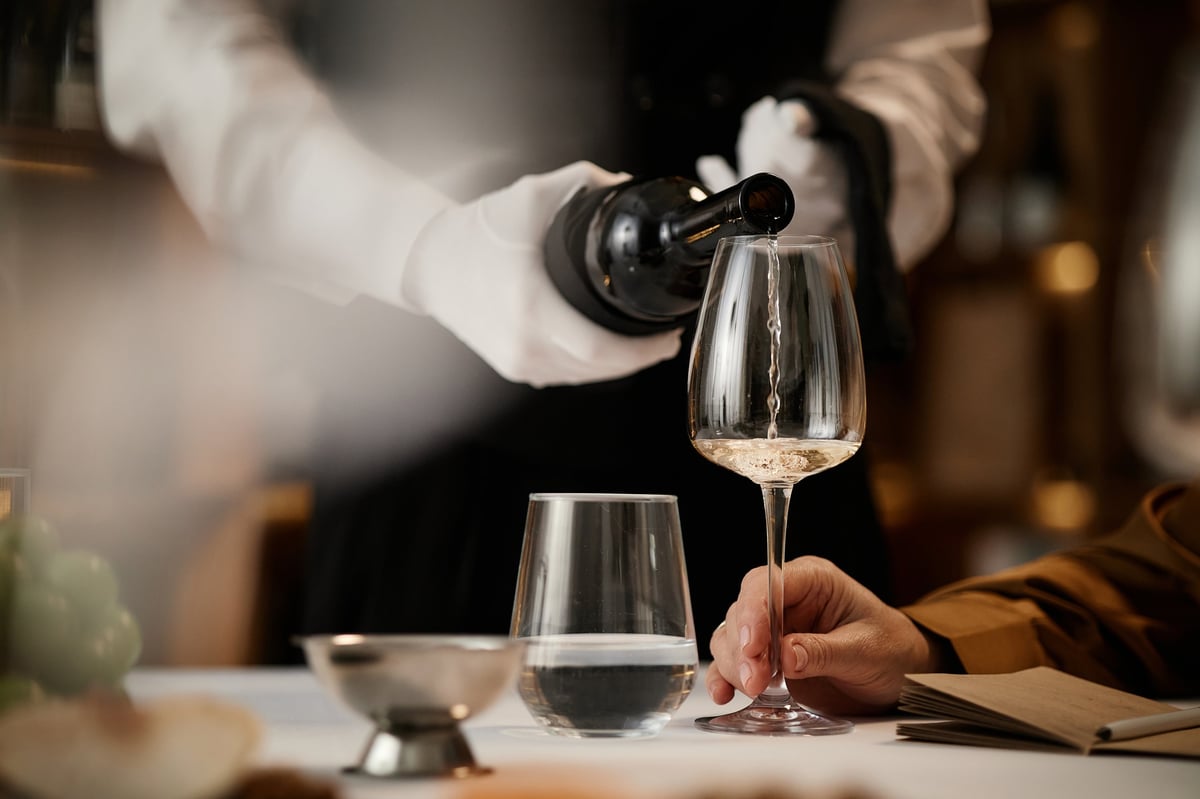
When the sommelier presents the cork, do not sniff it — this is a Hollywood affectation that signals amateur status in any serious room. The cork is presented for you to verify the label branding, nothing more. The sommelier will pour a small tasting amount to the host (or the person who ordered the wine). Swirl gently, observe the colour against the tablecloth, bring the glass to your nose for a brief, considered inhalation, then taste. If the wine is sound, a simple nod suffices — no commentary is required. Glasses are held by the stem, never the bowl, as the warmth of your hand alters the temperature of the wine. When not drinking, your glass returns to the upper right of your setting. Water glasses — still to the left, sparkling to the right — should be filled throughout the meal by attentive staff without your ever needing to request it. If service fails in this regard, a brief, polite gesture toward your glass is sufficient.
Knife and fork placed in an inverted 'V' on the plate, tines facing down, handles at 4 and 8 o'clock. This signals to the waiter that you are merely pausing — the course continues.
Knife and fork placed together at approximately 4 o'clock (or 6 o'clock in the British style), tines facing up, handles parallel. This is the universal signal: 'I have finished. You may clear.'
Knife placed through the tines of the fork, forming an 'X.' This discreet signal communicates displeasure without a word spoken. In the finest rooms, the maître d' will inquire discreetly.
Cutlery placed horizontally across the top of the plate forms a line of approval — though in practice this is rarely used in modern fine dining, as a quiet word to the maître d' carries greater weight.
The host determines the pace and direction of conversation. When dining as a guest, follow their lead. Speak to the person on your left during the first course, to your right during the second — an old protocol that ensures no guest is ever isolated. Never speak across the table in a raised voice. Never discuss business before the main course unless the host introduces it. Never engage with your telephone at the table — it should remain out of sight entirely. If you must take a call, excuse yourself from the table and step away entirely. The finest dining rooms have no tolerance for devices on the table, and the finest diners require no reminder of this fact.
If you are the host, the bill should never arrive at the table unprompted. Arrange payment in advance — your VIPMAKKI concierge handles this as standard — or excuse yourself discreetly to settle it away from your guests. Never discuss the cost of the meal at the table or within earshot of other diners. When thanking the chef or the maître d', a brief, sincere word is more powerful than effusive praise. A handwritten note to the chef the following day — arranged through your concierge — marks you as a diner of genuine refinement. Gratuity: in the finest establishments, service charge is included, but a separate gratuity for the sommelier and maître d' is a mark of the truly discerning. Your VIPMAKKI team will advise on appropriate amounts for each establishment. As a general principle, their recommendation should be followed precisely — neither more nor less, as both extremes communicate inexperience.
From securing the most coveted tables in the world to arranging every detail of your evening — VIPMAKKI ensures you arrive prepared, dine with grace, and leave an impression that endures.